
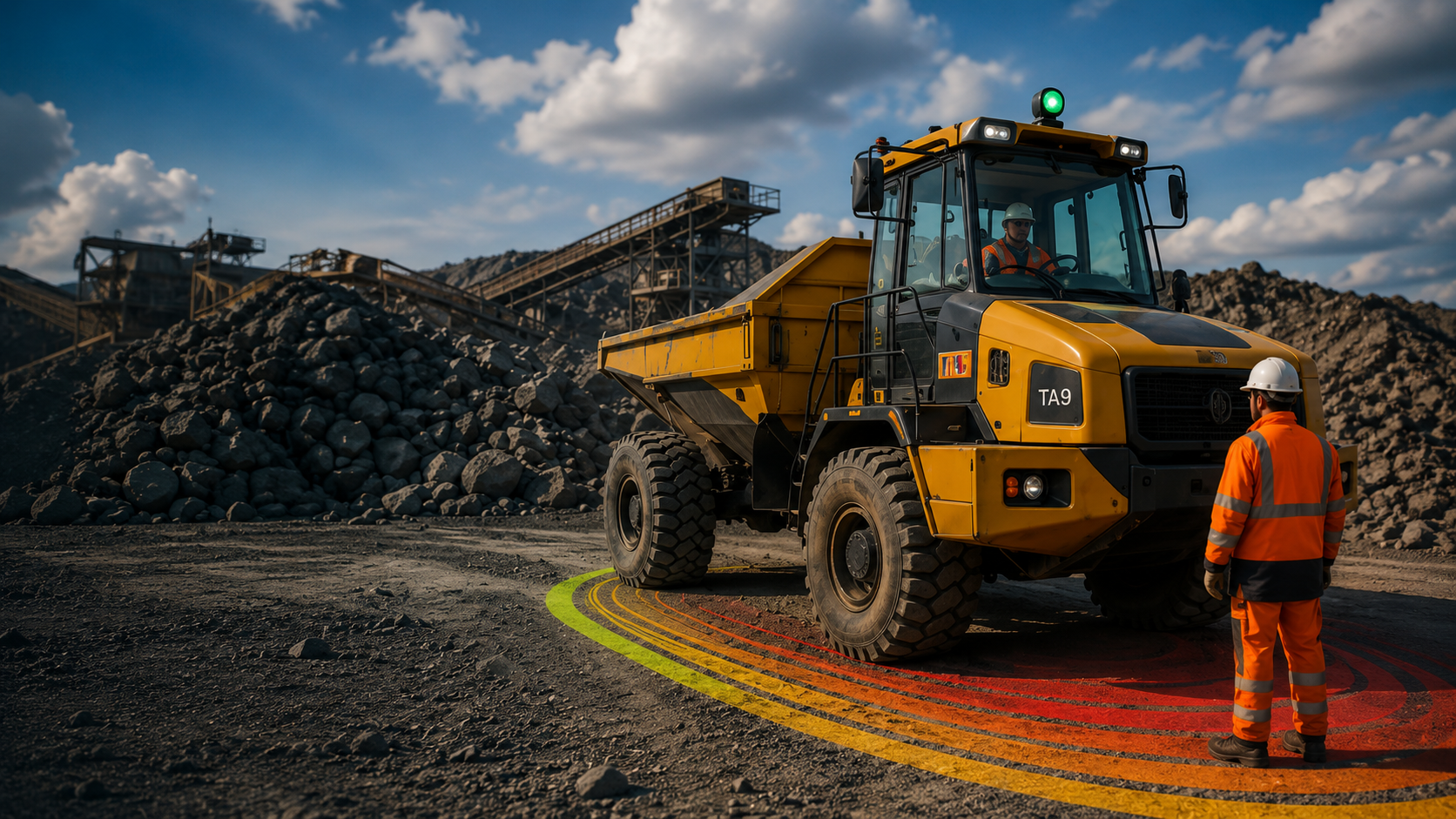
HFR Driver Feedback System
AI Human Form Recognition Cameras
for Safer Fleets
An AI-powered HFR system for pedestrian detection around plant machinery, HGVs and commercial fleets operating in high-risk environments.
AGL's Human Form Recognition (HFR) cameras use artificial intelligence to detect human presence around vehicles and machinery. Audible and visual warnings help operators recognise potential danger and react quickly.
Detection
Driver Alerts
Awareness
Safety
What Is Human Form Recognition?
How Human Form Recognition Systems Improve Site Safety
A Human Form Recognition system is a camera-based human detection system that uses artificial intelligence to identify human presence around vehicles and plant machinery. HFR systems utilise AI-powered cameras to help reduce the risk of blind-spot collisions and distinguish people from static objects. Unlike conventional proximity sensors, camera-based detection focuses on human form, helping reduce excessive alerting from non-human objects. Pedestrians do not need to wear RFID tags for detection.
HFR is particularly useful on construction sites, in quarries and across logistics operations. Excavators, dumpers, telehandlers and HGVs can have restricted visibility, increasing risks to site personnel and vulnerable road users.
HFR gives operators extra awareness. It does not replace mirrors, observation, risk assessments, training or safe systems of work.
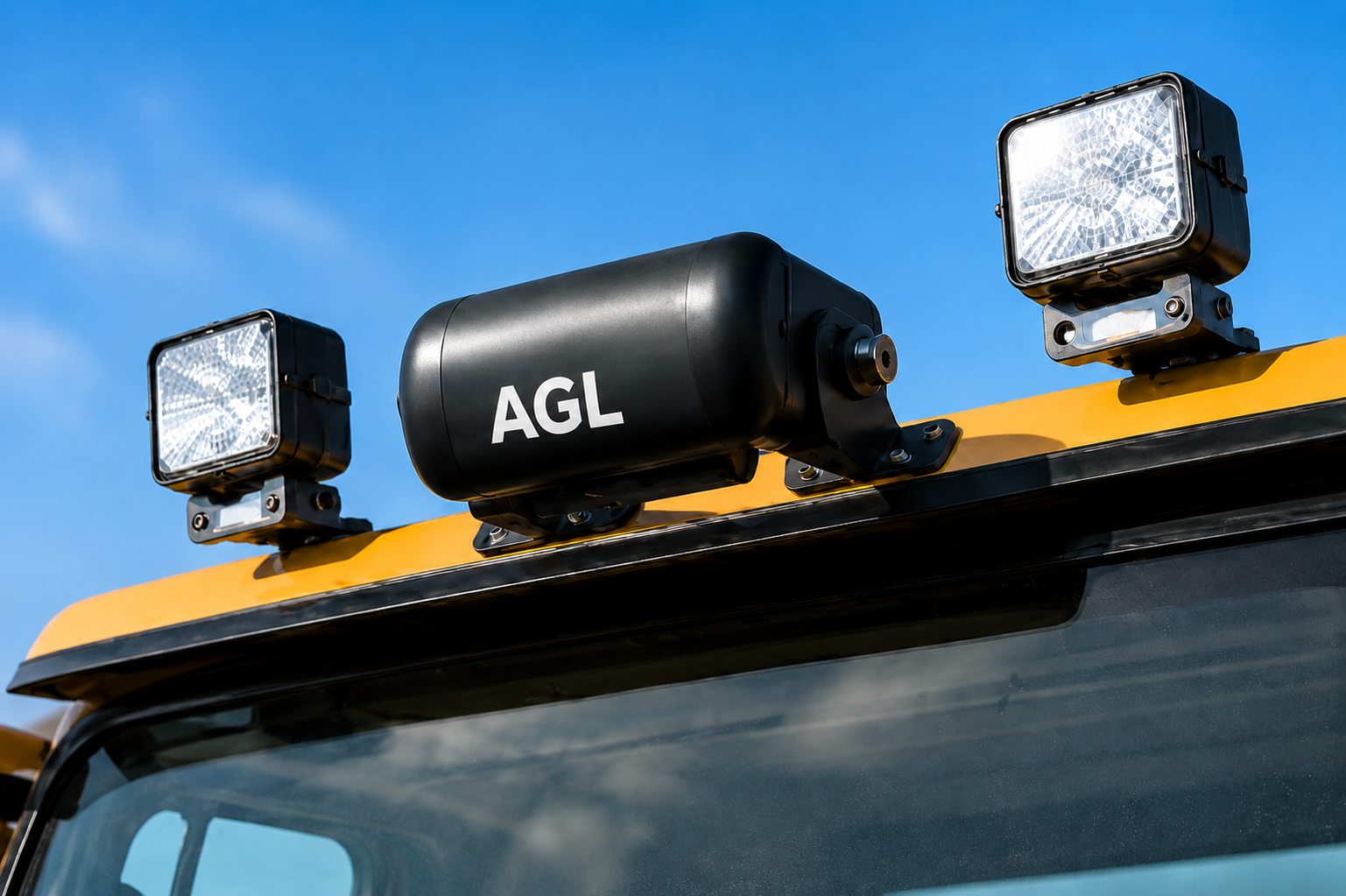
Human-Focused Detection
AI analyses camera images to identify people within configured areas around the vehicle.
Real-Time Warnings
Operators can receive visual and audible warnings when a person is detected.
Configured Risk Zones
Coverage can be designed around vehicle blind spots and operational requirements.
More Relevant Alerts
Human-focused detection helps reduce excessive alerting from non-human objects, keeping warnings relevant to the operator.
How HFR Works
From Human Detection to Driver Warning
The HFR system analyses camera images in real time, enabling operators to recognise human presence within configured detection zones.
1. Monitor
AI cameras monitor selected areas around the vehicle or machine.
2. Analyse
The system analyses the camera image for human form.
3. Detect
A person entering the configured detection area is identified.
4. Alert
Audible and visual warnings draw the operator's attention to potential danger.
5. Respond
The operator can assess the warning and react quickly when safe to do so.
HFR Camera Configuration
4-Camera or 5-Camera HFR Systems for Specialist Plant
Compatible plant machinery can use a four-camera or five-camera HFR system. Where suitable, the system can integrate with existing cameras, reducing unnecessary hardware replacement. Dedicated HFR cameras and driver monitoring can be added according to operational and safety requirements.
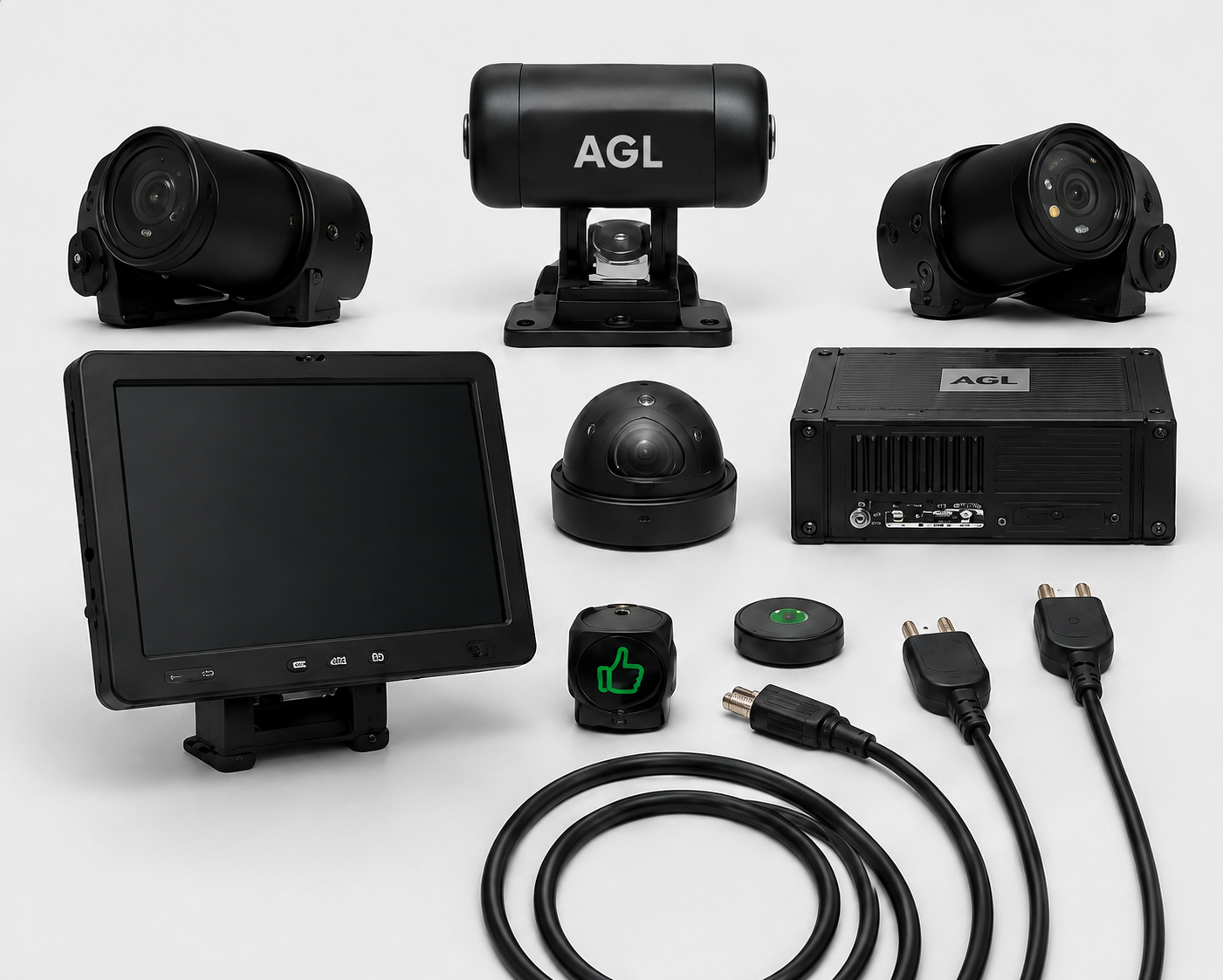
4-Camera Configuration
A dedicated front camera can work with compatible factory-fitted rear and side cameras. Together, they provide four monitored views around the machine.
5-Camera Configuration
The five-camera option adds an interior dome camera to the four-camera setup. This provides driver monitoring where required.
Configured In-Cab Display
Camera views can appear in a consistent order: front, rear, left, right and driver. This gives the operator a familiar layout.
Vehicle and plant layouts vary. Final camera positions, compatibility with factory-fitted cameras and the required HFR configuration are confirmed during specification and professional installation.
Recording & Connected Evidence
Add Multi-Camera Recording, GPS and Remote Access
Pair HFR with a compatible AGL MDVR to add high definition image recording, GPS information and connected vehicle data. Where detection event logging is supported and configured, fleet managers can review pedestrian detection events, identify potential high-risk site hotspots and use this information to improve site safety and operational procedures.
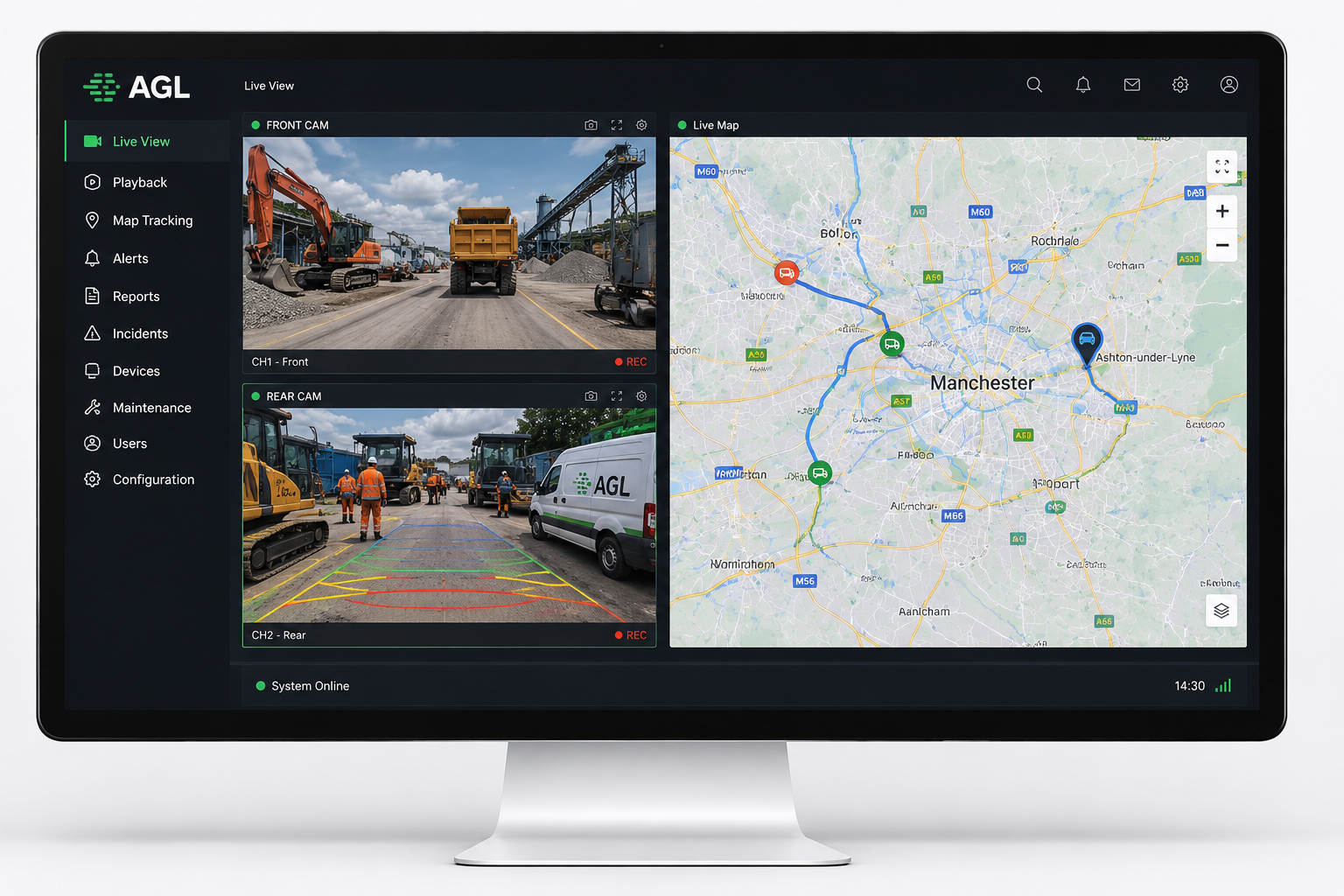
Driver Feedback
Real-Time Visual Warnings and Audible Alerts
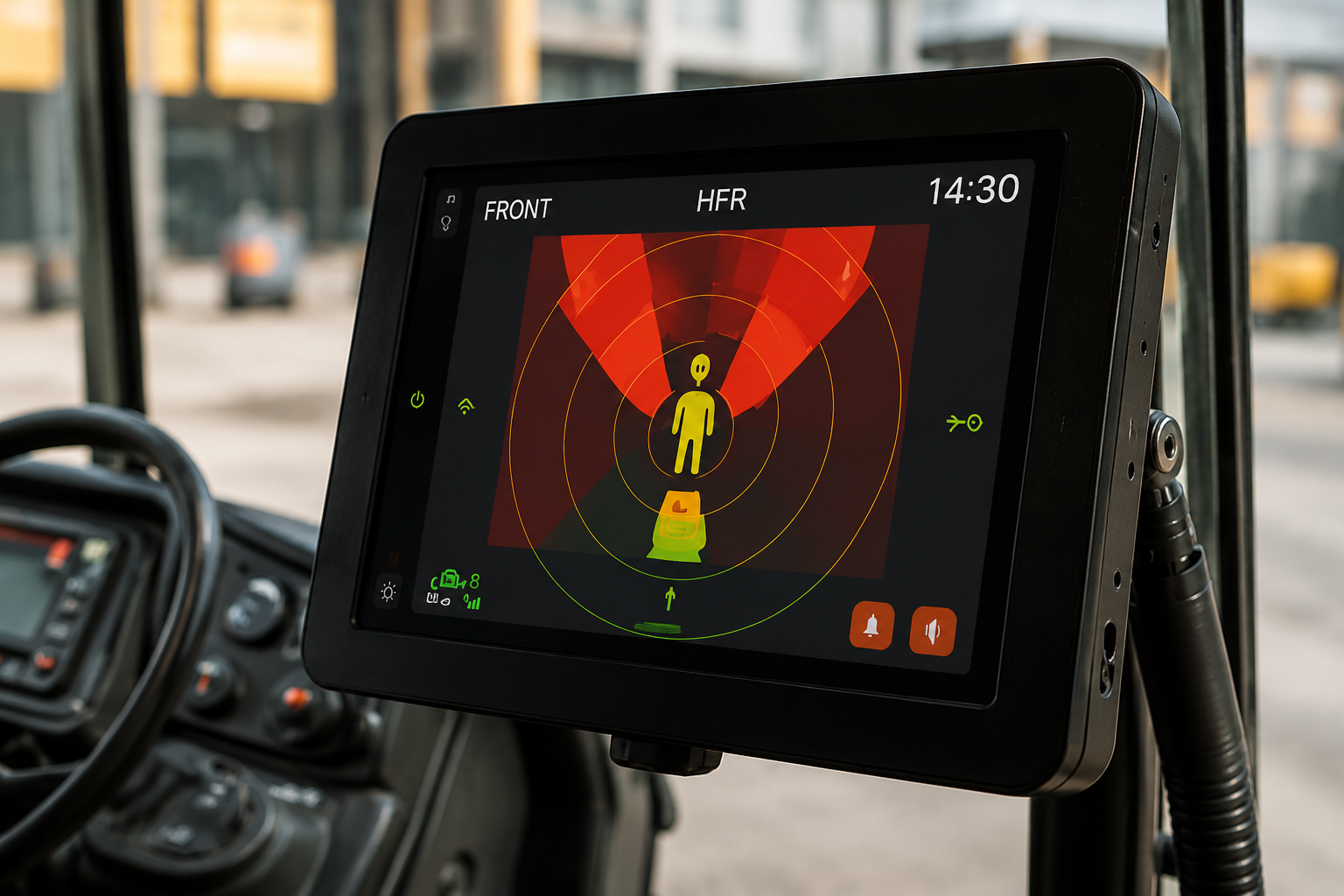
When the HFR system detects human presence within a monitored area, the high definition image highlights detected pedestrians using coloured boxes on the in-cab monitor. These real-time visual warnings help operators identify potential danger and react quickly. Audible warnings inside the cab and an external speaker provide additional alerts to operators and nearby site personnel.
This combination of audible and visual warnings supports safer interaction between pedestrians and large vehicles. Intelligent human detection distinguishes people from static objects, helping reduce excessive alerting and enabling operators to focus on genuine pedestrian risks when operating machinery in complex environments.
Detection Zones & Blind Spots
Configure HFR Around Your Vehicle and Working Environment
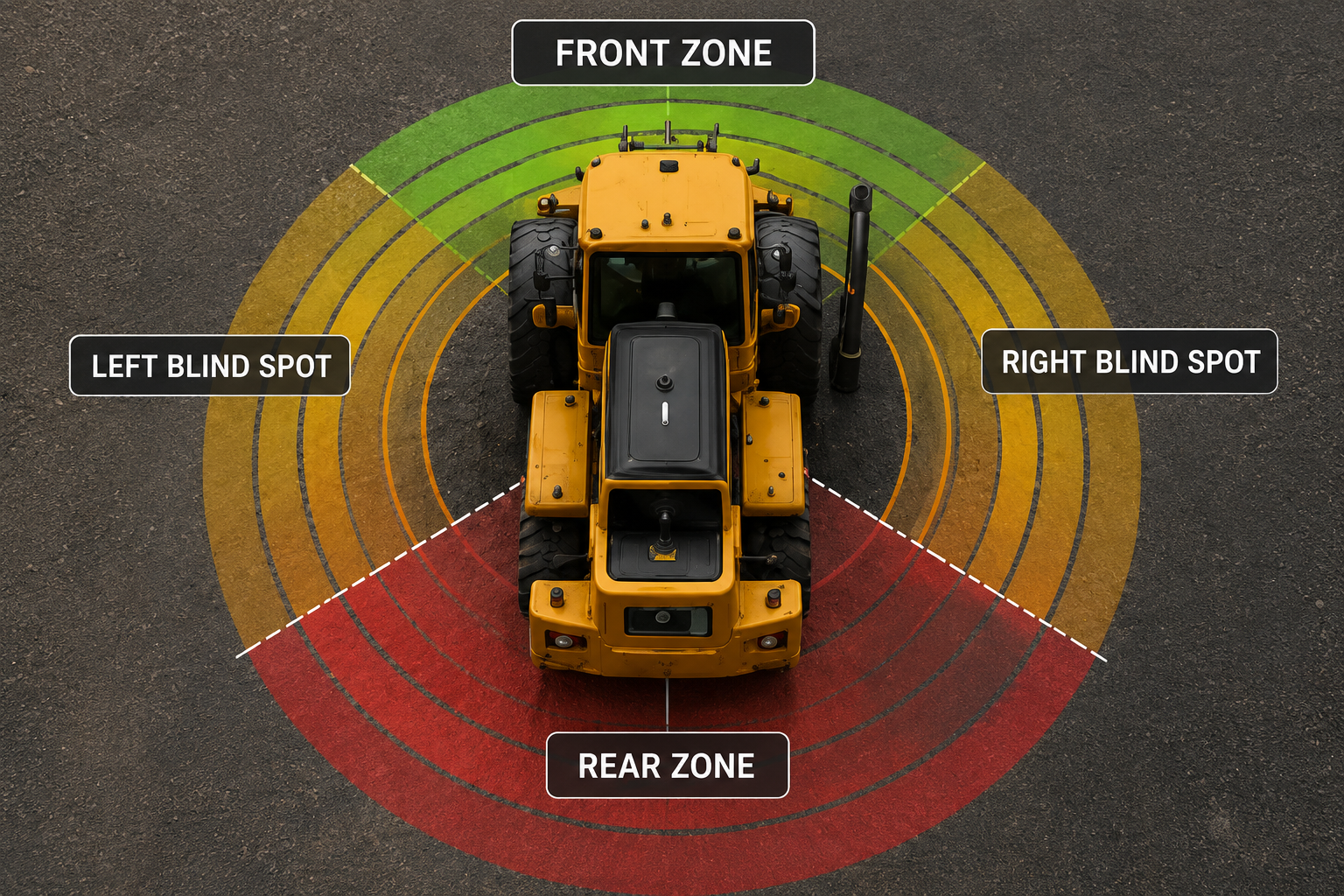
No single camera layout suits every operating machine. Depending on camera positioning and system configuration, multiple HFR cameras can provide up to 360° detection coverage around large vehicles and plant machinery. The right configuration helps minimise blind spots and supports safer interaction between operators, pedestrians and site personnel in complex working environments. Actual detection coverage depends on the vehicle layout, camera specification and installation.
Target High-Risk Areas
Position cameras to help minimise blind spots and improve awareness of pedestrians in high-risk areas.
- Rear and side blind spots
- Areas affected by reversing movements
- Working zones beside plant and machinery
- Approach areas around specialist vehicles
Build the Right Configuration
AGL can specify a camera layout for each vehicle instead of using one setup across the whole fleet.
- HGV and specialist commercial vehicle options
- Excavators, dumpers and telehandlers
- Four-camera and expanded camera configurations
- Driver monitoring and recording options where required
External Pedestrian Warning
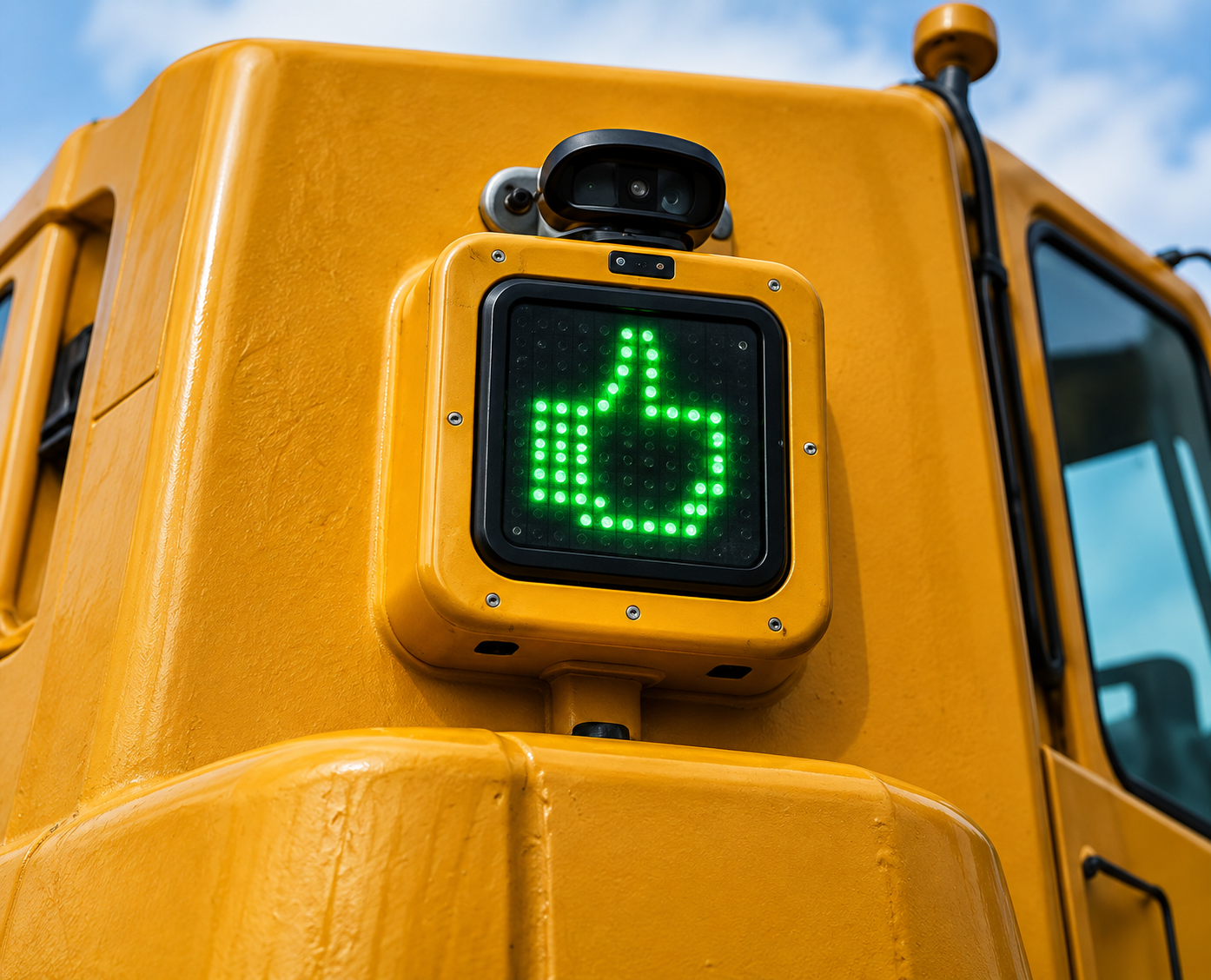
Digital Thumbs Up LED Safety Indicator
The external red and green LED indicator adds a visual signal outside the cab. It can be useful where workers regularly approach plant or commercial vehicles.
The display shows ground workers the configured vehicle status before they approach. This can help operators and pedestrians communicate in busy or noisy areas.
Connected AGL Fleet Technology
HFR Can Form Part of a Wider Fleet Safety System
HFR can work alongside other fleet safety technology. AGL can combine cameras, recording, tracking and AI tools to suit your operation.
The setup depends on your fleet. Connected systems can help you review incidents, understand vehicle activity and manage safety requirements.
Fleet Camera Systems
Build wider vehicle visibility and incident evidence around your fleet requirements.
Explore cameras →MDVR Multi-Camera
Connect multiple camera channels through a mobile digital video recording system.
Explore MDVR →AI Fleet Technology
Explore intelligent fleet safety tools for drivers, vehicles and operational teams.
Explore AI technology →Fleet Tracking
Combine vehicle location, journey and telematics information with wider fleet technology.
Explore tracking →High-Risk Industries
HFR Camera Systems for Fleets Working Around People
Human Form Recognition systems help improve site safety in environments where pedestrians work close to moving vehicles and specialist machinery. AI-powered pedestrian detection provides additional awareness in high-risk industries, particularly where restricted visibility and blind spots increase the risk of collisions.
Construction & Plant
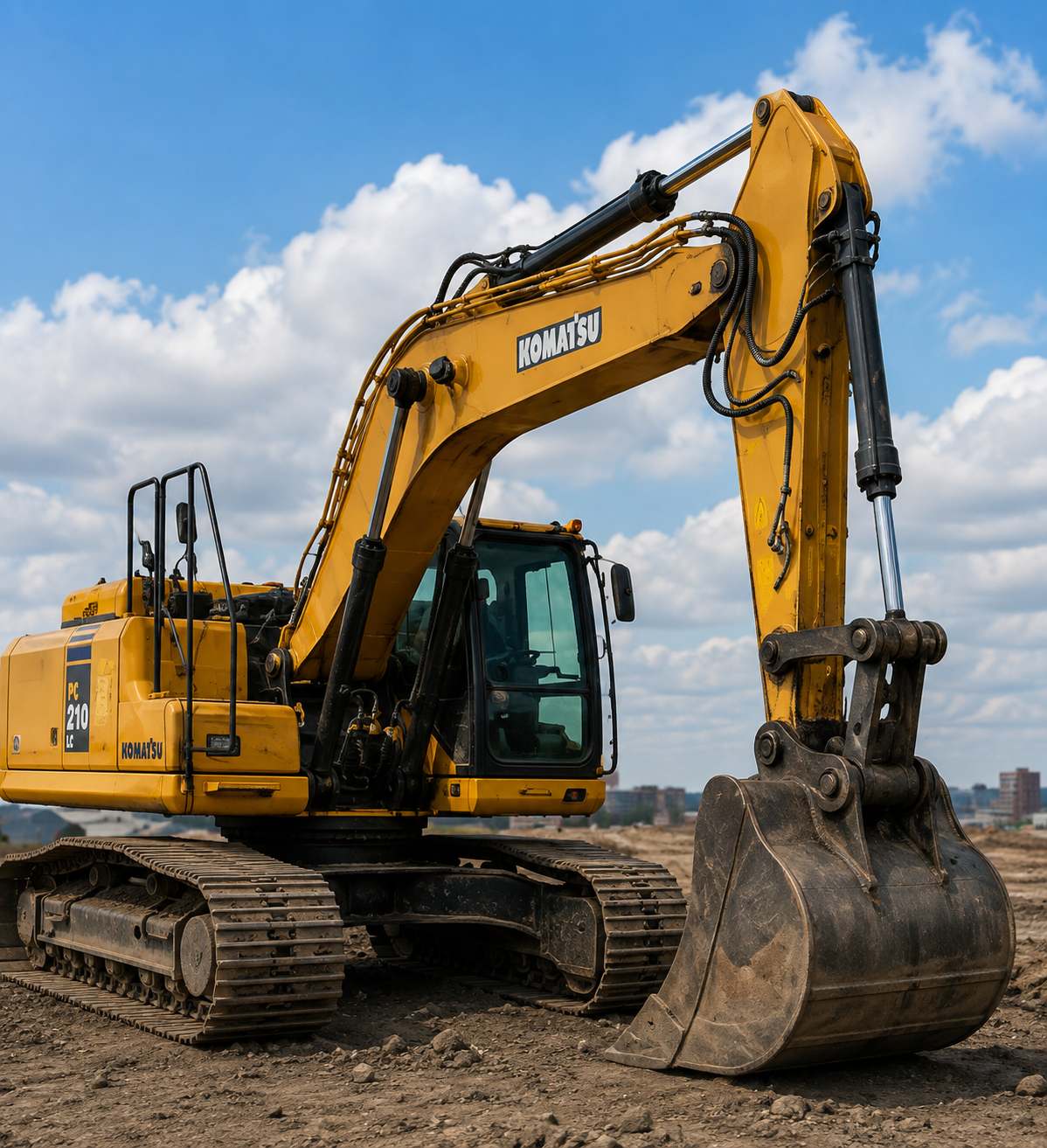
Help improve site safety on construction sites around excavators, dumpers, telehandlers and site vehicles.
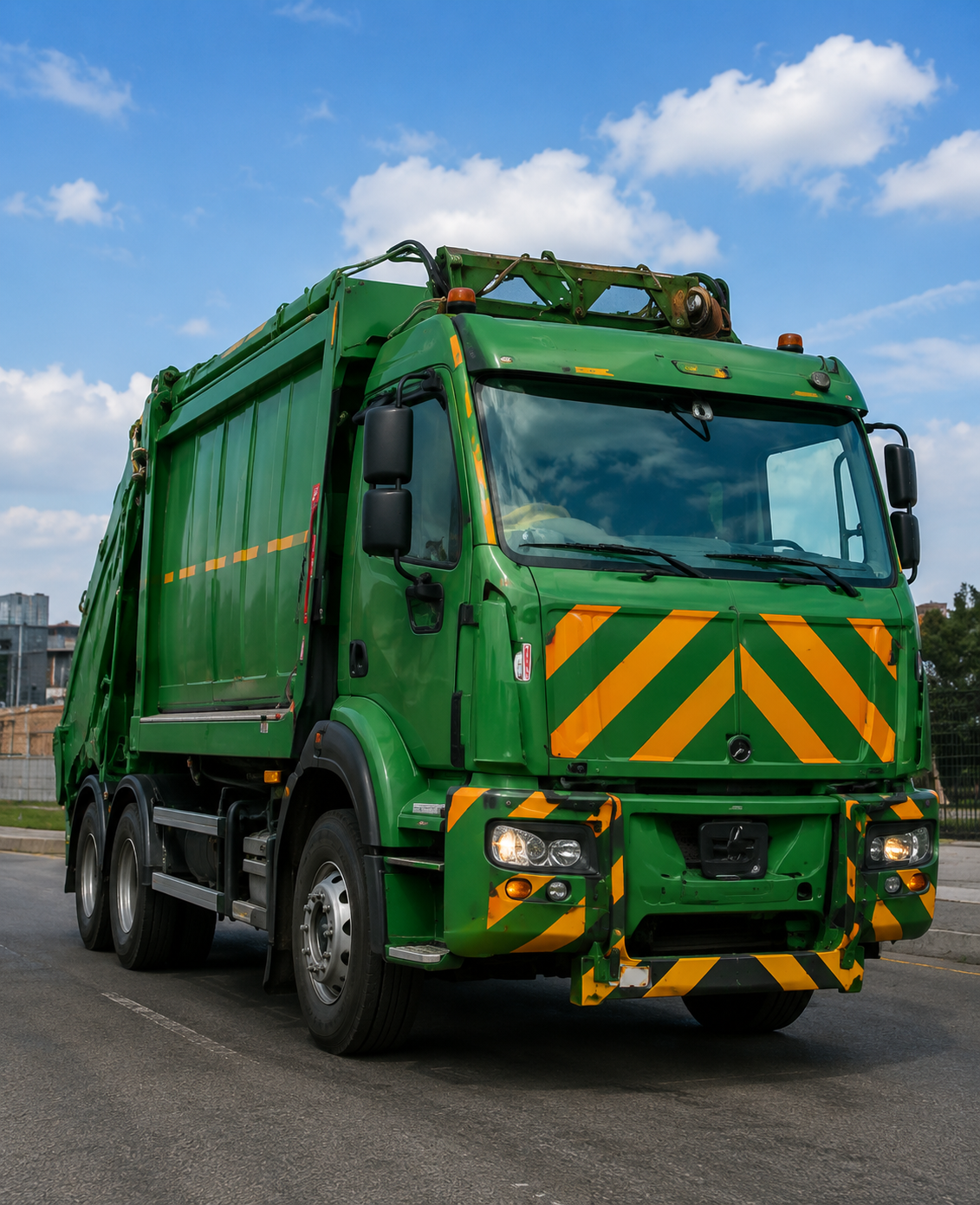
Waste & Recycling
Improve awareness where refuse vehicles, loaders and people operate close together.
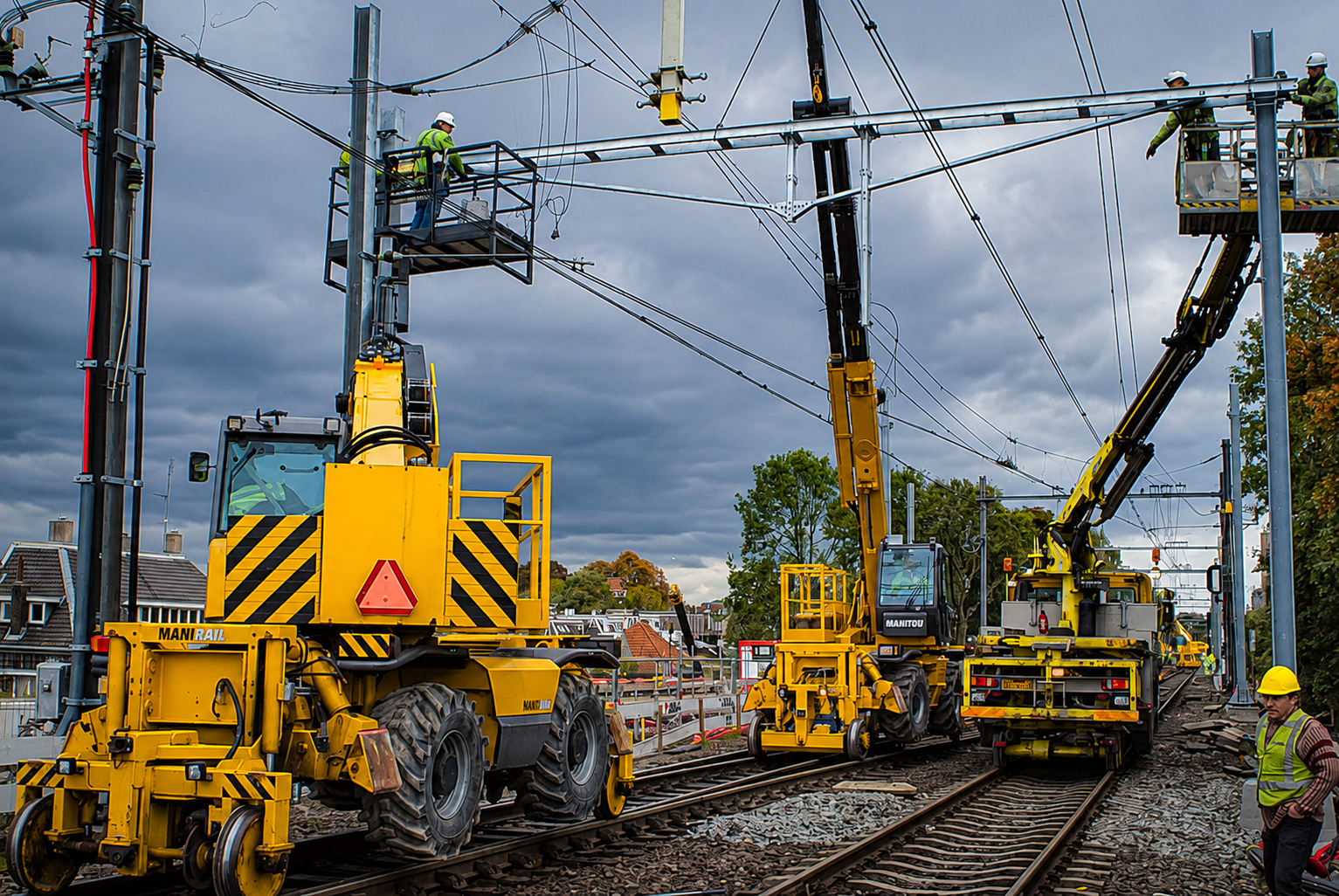
Rail & Engineering
Add pedestrian awareness around specialist rail vehicles, plant and infrastructure operations.
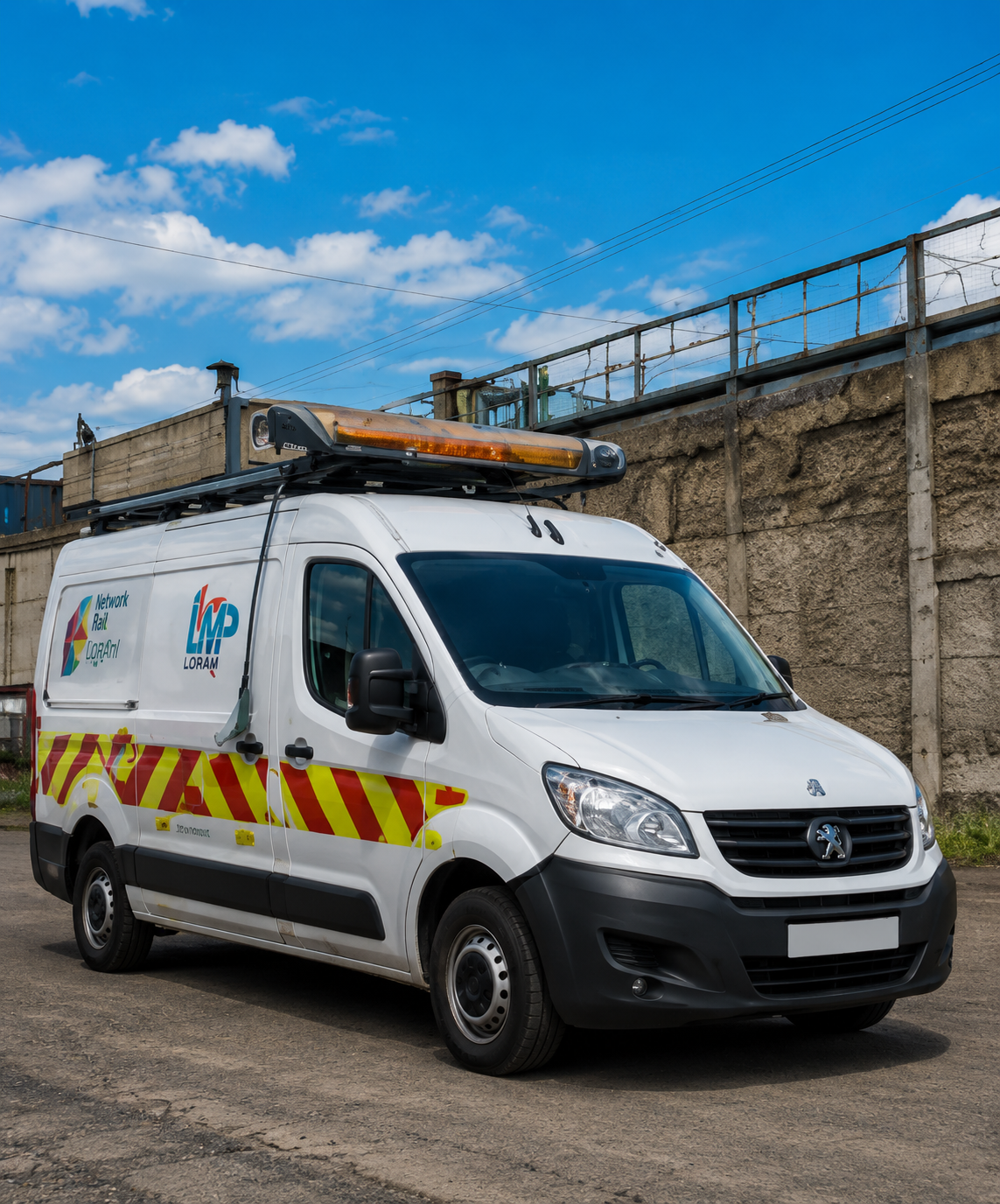
Utilities & Infrastructure
Help protect mobile teams working around vehicles, equipment and active sites.
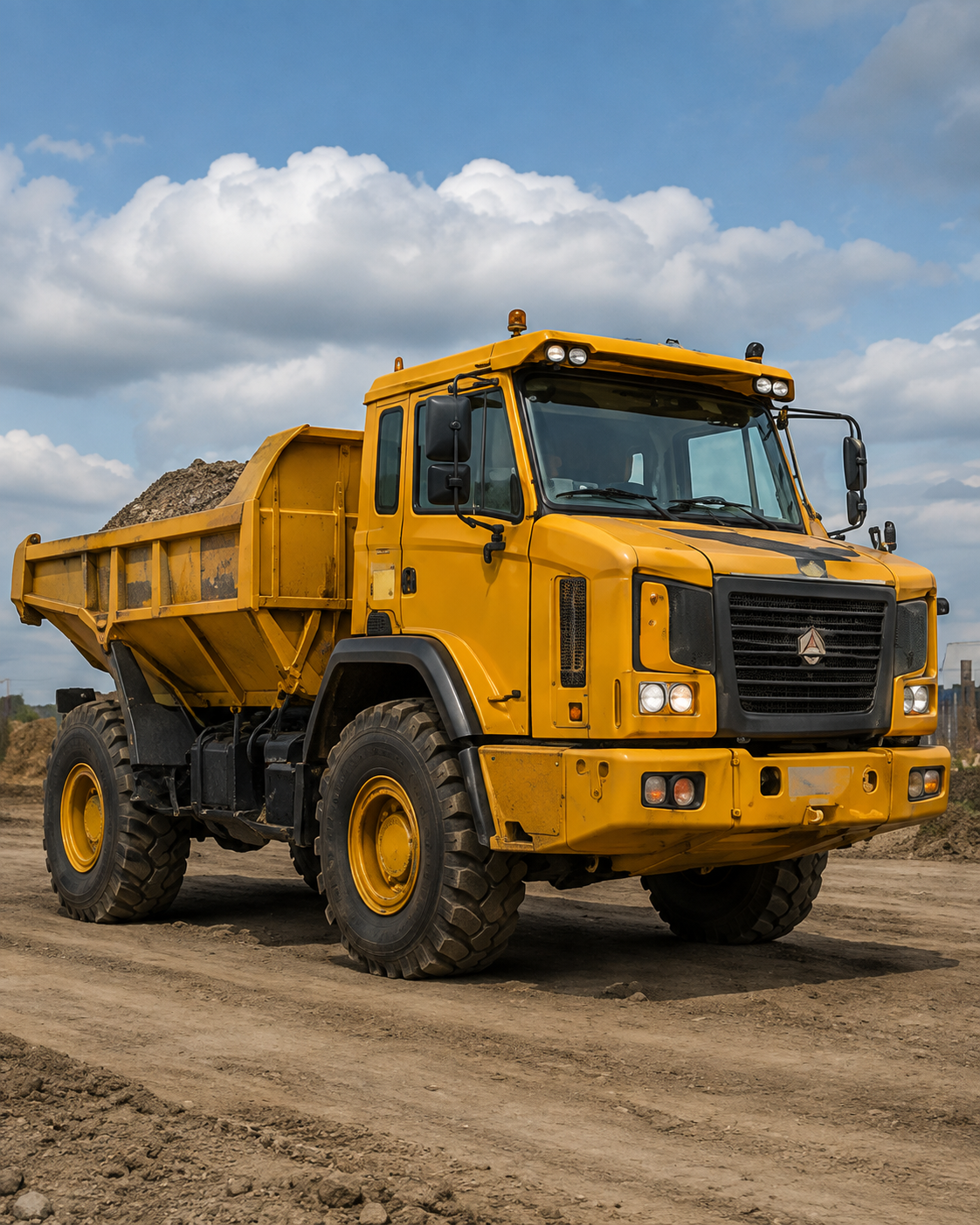
Quarries & Aggregates
Improve operator awareness around heavy plant, haul roads and people working on quarry sites.
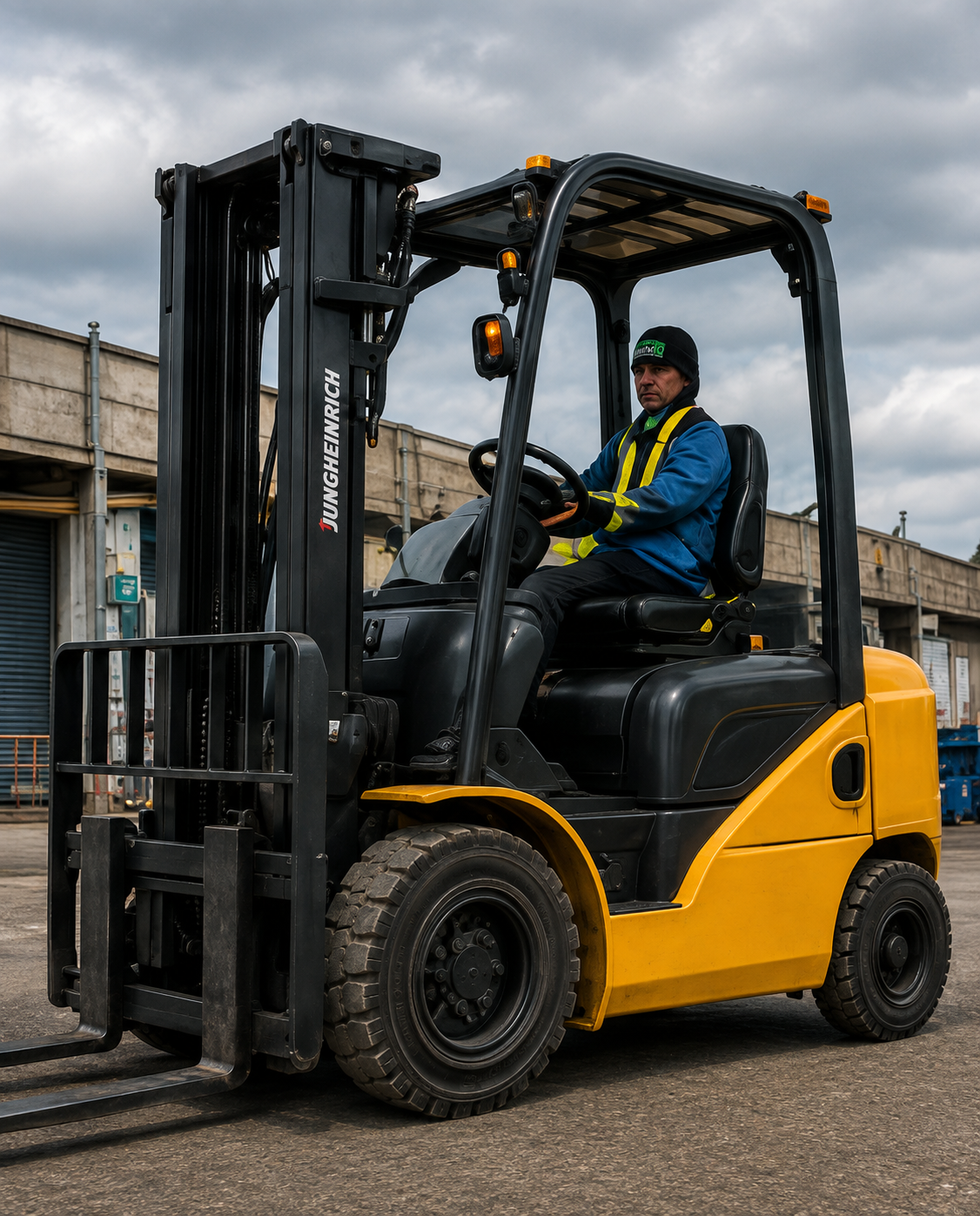
Logistics & Depots
Support pedestrian awareness around forklifts and vehicles in warehouses, busy yards and logistics depots.
Why HFR?
Better Awareness Around High-Risk Vehicle Movements
An HFR system offers more than another camera view. It helps operators recognise human presence in monitored areas and supports safer fleet operations.
Protect Drivers & Ground Workers
Add another layer of awareness where vehicles and people work in close proximity.
Improve Blind-Spot Awareness
Camera coverage helps operators monitor areas that can be difficult to see directly.
Make Alerts More Relevant
Human-focused detection can reduce unnecessary warnings caused by many non-human objects.
Support Safer Manoeuvring
Give operators additional warning information during reversing and other high-risk movements.
Configure Around Your Fleet
Build the camera and warning setup around vehicle type, risk and operating environment.
Connect Wider Safety Technology
Combine HFR with compatible cameras, recording, telematics and fleet technology where required.
Frequently Asked Questions
HFR Human Form Recognition Camera FAQs
Common questions about HFR cameras, AI pedestrian detection, driver warnings, plant safety and connected vehicle technology.
What is an HFR camera?
HFR stands for Human Form Recognition. Its cameras use AI to detect people in configured areas around a vehicle or machine. The system can then warn the operator.
How is HFR different from a standard vehicle camera?
A standard camera shows video. HFR also analyses the image to recognise people in selected areas. It can warn the operator when it detects someone.
How does HFR alert the driver or plant operator?
Depending on the setup, the operator can see a warning on the in-cab monitor and hear an alert when HFR detects a person.
Can HFR help reduce unnecessary alerts?
HFR is designed to tell people apart from many other objects. This can make warnings more relevant than alerts for every nearby object. Performance depends on the equipment, installation and conditions.
Which vehicles can HFR be fitted to?
HFR can suit excavators, dumpers, telehandlers, HGVs and other specialist vehicles. Camera positions depend on the vehicle and its operating risks.
Can HFR detection areas be configured around my vehicle?
Yes. Detection areas can be configured to suit the vehicle. Coverage depends on the equipment, camera positions and installation requirements.
What is the HFR Thumbs Up safety indicator?
The external red and green LED indicator shows a visual status signal to people near the vehicle or machine. It can help workers understand the configured status before approaching.
Can HFR integrate with other AGL fleet technology?
AGL can combine HFR with compatible cameras, recording, tracking and other fleet technology. Available integrations depend on the equipment and setup.
Does HFR replace normal site safety procedures?
No. HFR helps operators but does not replace safe systems of work, risk assessments, training, observation or other required safety controls.
Can HFR be supplied as a 4-camera or 5-camera system?
Yes. Compatible specialist plant can use four or five cameras. The five-camera option can add an interior dome camera for driver monitoring. AGL confirms compatibility and camera positions for each machine.
Can HFR use factory-fitted vehicle cameras?
Yes, on compatible machines. HFR can use suitable factory-fitted rear and side cameras alongside dedicated cameras. AGL checks compatibility during specification.
Can HFR footage be recorded through an MDVR?
Yes, with a compatible MDVR. Supported setups can record multiple 1080P camera channels and link video with GPS, G-sensor and other vehicle data for review.
Does AGL provide UK-wide HFR installation and support?
Yes. AGL Vehicle Solutions provides professional installation and ongoing fleet technology support across the UK.
Do pedestrians need RFID tags for HFR detection?
No. Camera-based Human Form Recognition uses image analysis to identify human form without requiring pedestrians to wear RFID tags.
Can an HFR system support London DVS and Progressive Safe System requirements?
Human detection technology can form part of a suitable Progressive Safe System (PSS) configuration for HGVs operating in London. An HFR camera alone does not establish compliance with the Direct Vision Standard (DVS) permit requirements. The complete vehicle installation must meet the applicable requirements.
Can mud, dust or extreme weather affect HFR cameras?
Yes. Mud, dust, poor visibility and extreme weather can affect camera-based detection. Keep camera lenses clean, check the system regularly and maintain normal site safety procedures.
Ready to Improve Vehicle & Site Safety?
Build the Right HFR System for Your Operation
Speak to AGL about HFR cameras, pedestrian detection and connected safety technology for your vehicles and plant.