AI Dash Cameras vs Standard Vehicle Cameras: What’s the Difference and Which Does Your Fleet Need?
Discover how AI fleet cameras provide real-time alerts, driver visibility and proactive incident prevention compared with traditional vehicle camera systems.
Vehicle cameras are becoming a standard part of modern fleet operations.
For many businesses, cameras started as a way to record incidents and provide evidence after something had already happened.
Today, technology has moved on.
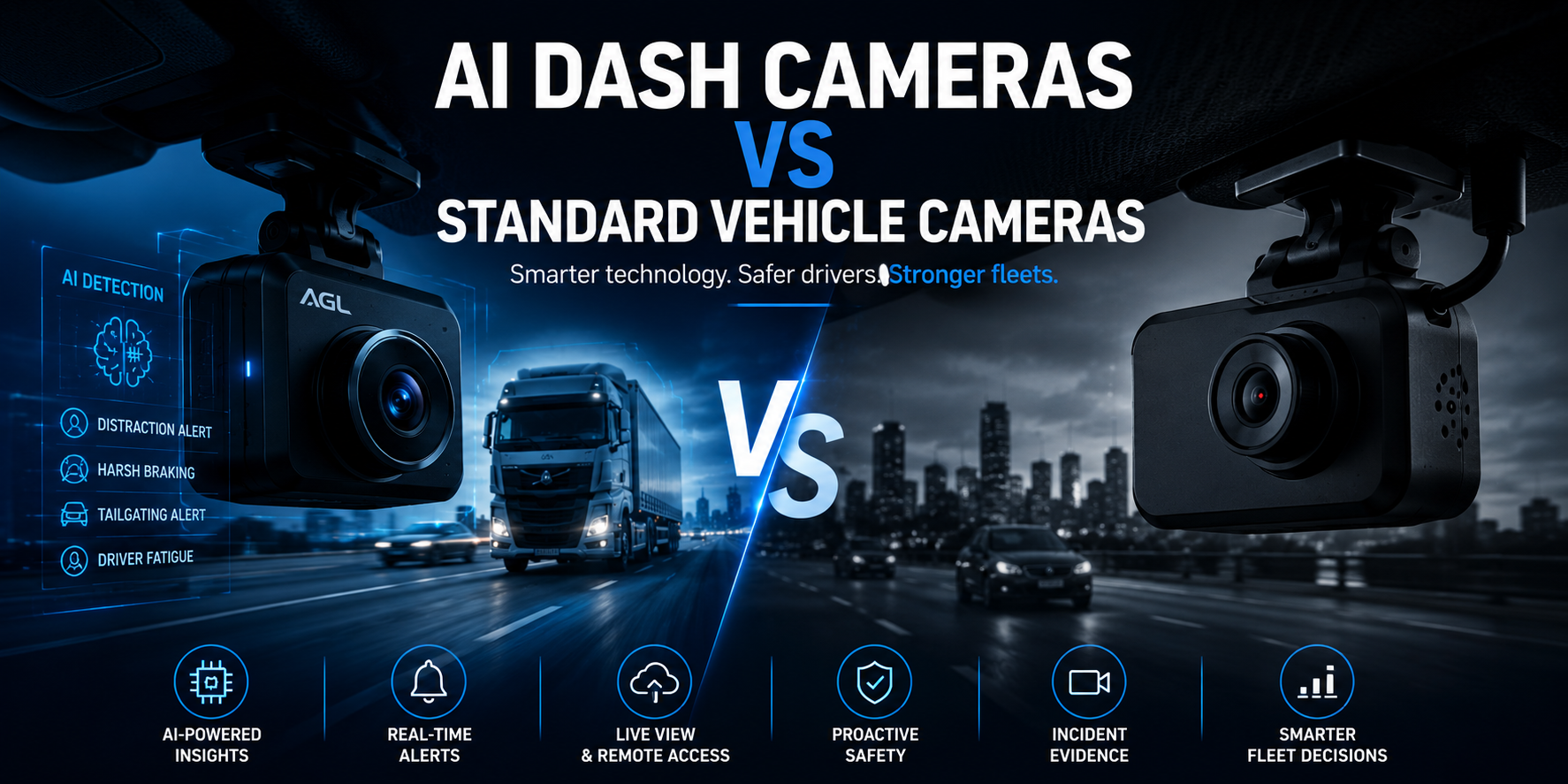
AI dash cameras are changing the way fleets approach safety, visibility and incident management—moving from reactive recording to proactive protection.
So what is the difference, and which solution is right for your operation?
Why Vehicle Cameras Have Become Essential
Running a fleet today means balancing safety, compliance, operational efficiency and cost control.
Whether you operate commercial vans, HGVs, plant vehicles or mixed fleets, incidents can have a significant impact through:
- Insurance claims
- Vehicle downtime
- Repair costs
- Lost productivity
- Customer delays
- Driver safety concerns
Vehicle cameras help create visibility—but not all systems deliver the same level of intelligence.
What Is a Standard Vehicle Camera?
Traditional vehicle camera systems are designed to record journeys.
They capture footage which can later be reviewed if an incident occurs.
Typical features include:
- Continuous recording
- Local storage (SD card or DVR)
- Manual footage retrieval
- Incident playback
- Driver and road visibility
These systems can provide valuable evidence after an event.
However, their limitation is simple:
They normally tell you what happened after the incident—not while it is happening.
What Is an AI Dash Camera?
AI dash cameras use intelligent software alongside video capture.
Instead of simply recording, they actively monitor driving conditions and identify risk indicators in real time.
Depending on system configuration, AI technology can support:
- Driver distraction detection
- Mobile phone usage alerts
- Harsh braking identification
- Tailgating detection
- Driver fatigue monitoring
- Unsafe manoeuvre alerts
- Real-time notifications
- Live visibility and connected footage
The goal is not replacing drivers.
The goal is helping prevent incidents before they occur.
AI Dash Cameras vs Standard Vehicle Cameras
Feature Standard Camera AI Dash Camera
Records video ✓ ✓
Incident evidence ✓ ✓
Real-time alerts ✕ ✓
Driver behaviour monitoring ✕ ✓
Remote visibility Limited ✓
Event notifications ✕ ✓
Driver coaching support Limited ✓
Preventative safety tools ✕ ✓
When Standard Cameras Still Make Sense
Standard vehicle cameras remain a strong option for businesses that want:
- Straightforward evidence collection
- Basic driver protection
- Lower complexity installations
- Historical journey footage
For some fleets, this level of visibility may be enough.
When AI Dash Cameras Add More Value
AI technology becomes particularly valuable when businesses want to:
- Reduce incidents
- Improve driver safety
- Gain operational visibility
- Support coaching programmes
- Access footage remotely
- Improve First Notification of Loss (FNOL) processes
- Combine cameras with telematics data
Fleets increasingly want insight—not just footage.
The Future Is Connected Fleet Visibility
The biggest change happening across fleet technology is integration.
Operators are increasingly combining:
- Vehicle tracking
- AI camera technology
- Driver behaviour data
- Live fleet visibility
- Operational reporting
Together these technologies create a more complete view of what is happening across the fleet.
Final Thoughts
Choosing between a standard vehicle camera and an AI dash camera is not about which technology is better.
It is about which technology aligns with your operational goals.
If your priority is recording incidents, a standard system may meet your needs.
If your goal is improving visibility, reducing risk and becoming more proactive, AI technology offers capabilities that go beyond traditional recording.
At AGL Vehicle Solutions, we help businesses across the UK understand what technology fits their fleet—not simply sell hardware.
Whether you operate five vehicles or five hundred, selecting the right visibility platform can make a significant difference over time.